Free shipping with purchases of €20


Description
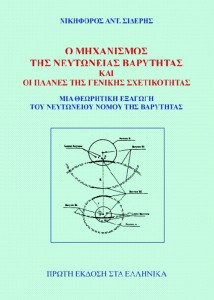
This book began in an attempt to derive Newton’s Law of Gravity (NBN), theoretically, since as is well known, this famous law has been derived from the observation of the motion of either celestial bodies (Planets around the Sun-Kepler’s Laws;) or from the falling of objects to Earth (and why not from Newton’s famous apple, if indeed it happened). But basically, this law comes from Newton’s clever handling of existing knowledge at that time. In physics, when we want to introduce new ideas, we begin to develop a certain model in our minds and then follow the next two stages: First we “dress” our model with the appropriate mathematics (since without mathematics we do philosophy at best or even science fiction rather than physics) and then we prove that mathematics leads us to the experimental verification of our model. In this spirit, the chosen model led to an expression for an advanced Newtonian law, which gave the well-known law as a special case that depended on the distance of the interacting bodies. For a certain distance, Newton’s well-known law applied, and beyond that a modified Newtonian law. So both the new and the familiar law freed me from momentary action at a distance. But based on logical arguments, the speed of the transmission of the gravitational interaction had to be superluminous. The correctness of the new expression emerged from its application for an extraction of the solutions of the four tests of General Relativity (GA). The author, taking into account another work of his that GS is not an authentic theory of gravity, proceeded in the way that the 4 tests with GA methods had been calculated by various authors. Then he found that in most of these cases there were mistakes for various reasons. These findings led him to add the word “Fallacies” to the title of this book.
Additional information
| Weight | 1 kg |
|---|---|
| Βιβλιοδεσία | Paperback |
| Διαστάσεις | 24x17cm |
| Αριθμός Σελίδων | 176 |
| Ημ. Έκδοσης | 2010 |
| ISBN | 978-960-8160-49-1 |
Reviews (0)
About Sideris Nikiforos A.
Nikiforos Sideris was born in Athens in 1933 but lived in Syros where he graduated with honors from high school in 1950. In 1956 he received the diploma of Civil Engineering from the National Technical University of Athens. In 1970, after three years of study at the University of Newcastle upon Tyne, England, he received a BSc. Honours in Physics but for health reasons in the unusual climate of northern England, he returned to Greece, although he had been accepted for a PhD in theoretical physics at the University of Durham. Since then he continued the profession of Pol. Engineer until he retired in 1995. But since 1970 he has not stopped devoting his free hours to the study of physics with a special interest in Gravity, Nuclear forces, Elementary Particle Physics and Cosmology. His entire activity in the field of physics is set out at the beginning of this book. As the reader will see, all his efforts were made in areas of physics where there were unsolved problems or problems for which he considered the existing solutions inadequate.
Related products
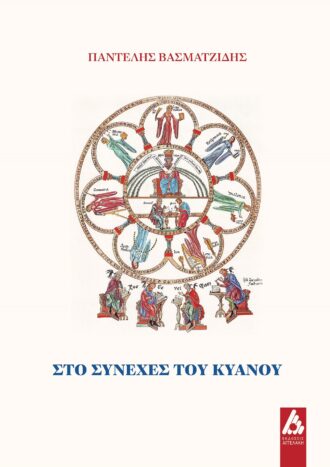
In the blue continuum
Τιμή εκδότη: 14,00€
Τιμή angelakis.gr: 12,60€


Interview with my past
Τιμή εκδότη: 15,00€
Τιμή angelakis.gr: 13,50€

Stories from yesterday
Τιμή εκδότη: 15,00€
Τιμή angelakis.gr: 13,50€
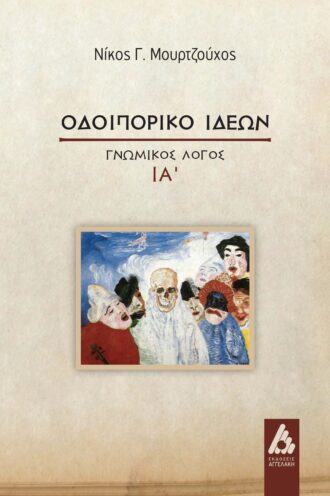
A Journey of Ideas IA
Τιμή εκδότη: 10,00€
Τιμή angelakis.gr: 9,00€

People and Landscapes
Τιμή εκδότη: 20,00€
Τιμή angelakis.gr: 5,00€

My little years in Kavala
Τιμή εκδότη: 12,00€
Τιμή angelakis.gr: 6,00€
A travelogue of ideas
Τιμή εκδότη: 12,00€
Τιμή angelakis.gr: 10,80€





Reviews
There are no reviews yet.