Free shipping with purchases of €20

Interview with Maria Prinari-Karkavatsaki

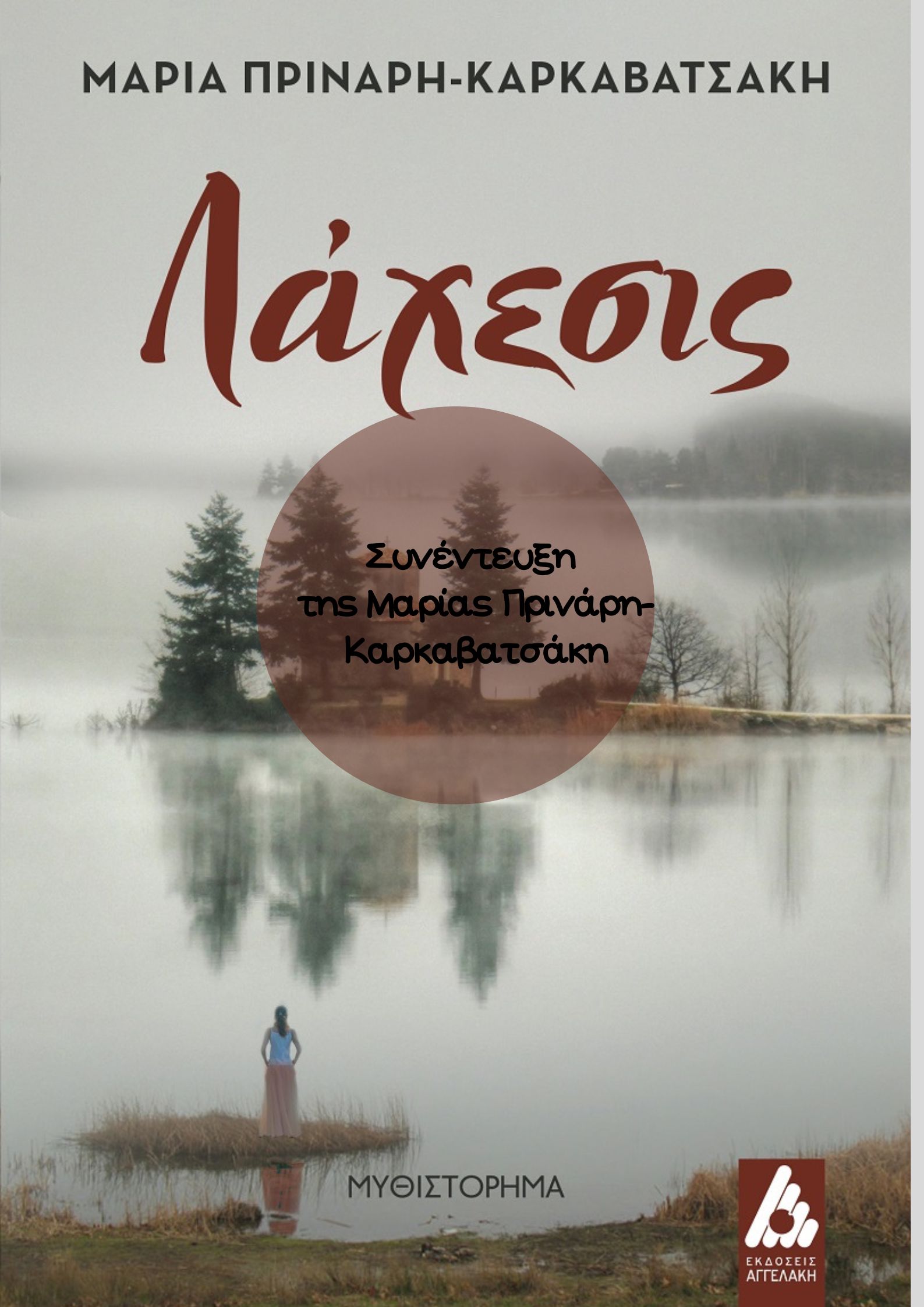
In your fourth book you deal with a topical issue: that of abuse. What was the reason for writing it?
I’m afraid that the issue of abuse has always been topical, but I will say that no specific event was the reason for me to write my fourth book. In fact, its writing began before the tsunami of abuse and femicide of the last three years broke out. Simply, the issue has always existed.
Doyour heroes live and act in today’s era?
The story takes place mainly within the last twenty years and reaches the present day. However, there are the necessary flashbacks to much earlier years, in order to connect people and events.
How do you see the fact that the masks have fallen and there is this tsunami of revelations of abusive relationships?
It should have been done, it should have been done many years earlier. Even in my book, Grandma Angela, who lived a century ago, leaves as a testament to her granddaughter the following words: “No one has the right to torture you and never allow it to anyone!”
Does life ultimately surpass the imagination of a writer?
We often wonder if literature copies life or if life copies literature. When I was writing this book and was nearing its completion, this tsunami of abuses and femicides broke out. Well, then I thought that life is beyond the imagination of the author…
You pose a question in the book: “No one can say for sure if there is a reason why everything is happening…” Do you think there is probably a reason after all?
Very often we also say that everything happens for a reason! But even if something happens for no reason, even if it is insignificant, it may become an occasion for everything to change. Just a moment, something insignificant and things turn upside down…
Do you remember something that a woman who read the book recently told you?
I imagine you mean if a woman found common elements of her life with the life of my heroine. No, at least one of them didn’t happen to tell me. Of course, the book does not only highlight the issue of abuse but many other issues that concern all of us, women and men. So some people talked to me about this or that issue, how much it touched them or how much it shocked them.
Is your book aimed only at a female audience?
Of course not. As I mentioned in my previous answer, it is read by women and men and concerns everyone. After all, I believe that there are no men’s and women’s books. Some may be more interested in one gender or the other, but I think that everything can be read by everyone and everyone will find something that concerns them.
How would you describe the writing and publishing adventure?
While I’ll agree that this can ultimately turn out to be an adventure at times, I’d rather call it a beautiful trip! A journey that leaves you with beautiful experiences, despite the difficulties you encounter.
What is your favorite book? What do you read over and over again?
I don’t usually read the same book over and over again. Even when I start reading a book, I avoid reading the back cover. I want it to be something completely new to me. I loved the books I read in my teens and early youth. Lountemis, Kazantzakis, Samarakis.
But since many years have passed since then, maybe I should read them again. Of course, Kazantzakis’ Asceticism is quite often in my hands. This is one of those books that you don’t read just once.