Free shipping with purchases of €20

Interview of Eleni Papadopoulou and Nikos Kouravanas to Marika Arvanitopoulou

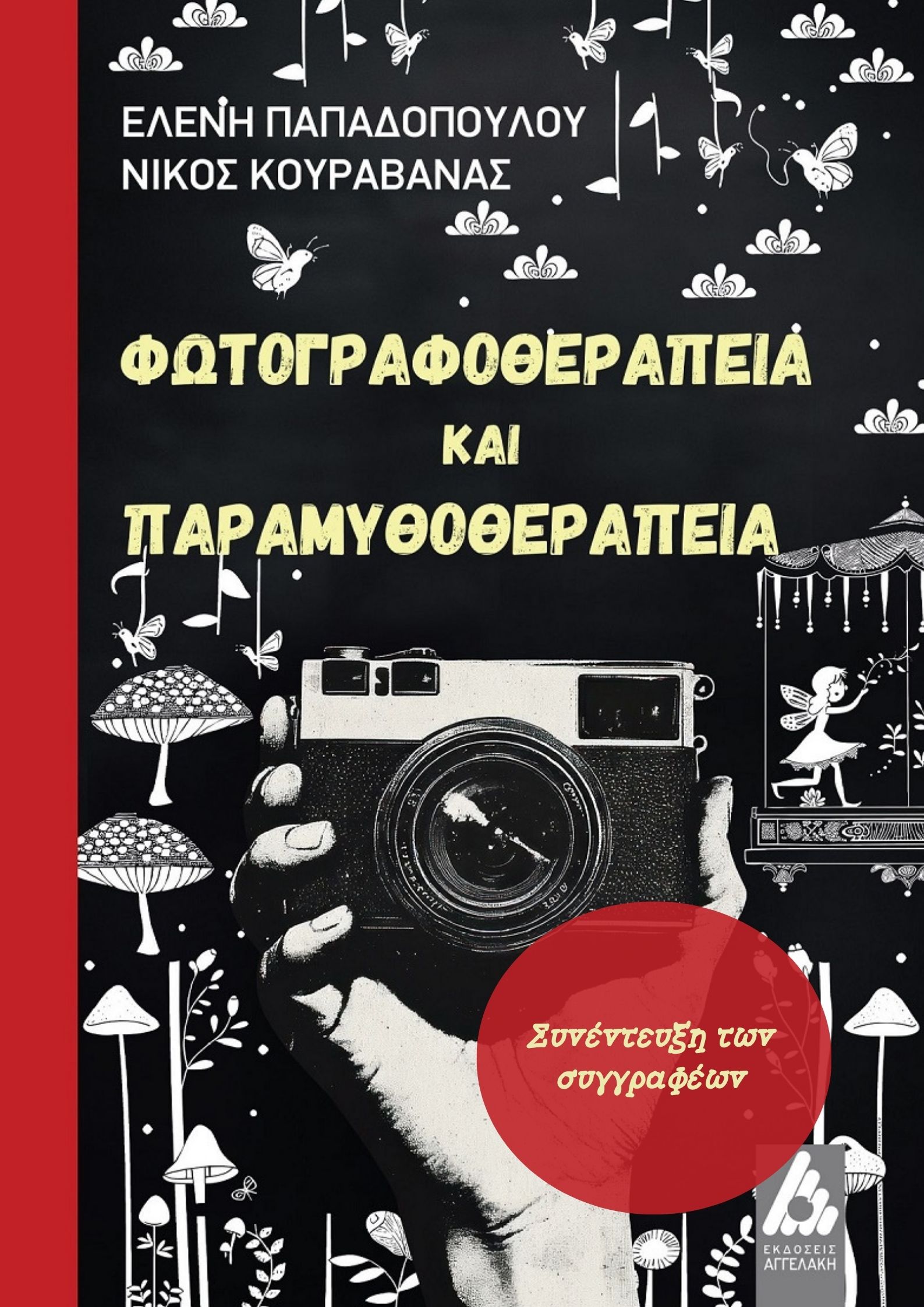
Is your new book the culmination of interviews with people you analyze?
This book is the fruit of a long-term experience in applying therapeutic approach techniques in the context of sessions with individuals and groups. It focuses in particular on the use of storytelling as a tool for exploring and processing personal experience and deeper self-awareness. Therefore, the book draws inspiration from sessions in which we had used photography and fairy tales as tools. These are two techniques based on art therapy (art therapy), i.e. a form of psychotherapy that uses creative means, such as fairy tales and photography, to help the person express and process feelings, thoughts, experiences, traumas, mental tensions and conflicts and in general past experiences that are difficult to express verbally.
Commenting on your book, you make it clear that it is not just another theoretical approach, but an invitation to personal exploration. From your experience, do you think that this can be achieved through the pages of a book?
The book initially describes the theoretical background for phototherapy and paratherapy, presenting how they can be applied in the context of therapy. However, because it draws on the experience of sessions, is inspired by storytelling, and stands on the cusp between theory and art, it is not just a theoretical approach… It becomes an invitation for contact, bridge and dialogue with the true self, but also a tool for self-observation and introspection. Therefore, ready-made solutions and tested recipes are not proposed, but a stimulus for deeper thinking and reflection, so that the reader can search for answers for himself and his life on his own. The book enables the reader to recognize his own experiences and interpret them in his own way.
Can a photograph or a fairy tale mobilize a mechanism of revelation about our problems and ourselves and our experiences?
Clearly, both photography and fairy tale can act as mechanisms of revelation, as they can activate internal processes, thoughts and feelings, which have remained silent for many years. Thus, the repressed experiences will come to the surface where we will now be able to process and analyze them.
Both photography and fairy tale are associated with symbols and metaphors, touching the unconscious, which includes unfulfilled desires and dreams, or repressed thoughts and traumatic memories. Through the photo or fairy tale, the person can project parts of themselves. For example, looking at a photograph the person may be moved or even agitated, not because the image evokes such feelings, but because the person has not processed them and carries them as a burden in his soul. On the other hand, reading a fairy tale can act as a mirror where the person identifies with the hero, reliving their own fears and concerns, reviving deeper desires and dreams, or seeking hope for a better future.
Therefore, photography and fairy tales can help reveal dark or well-hidden aspects of the self, and this revelation is the first step to understanding, acceptance, and ultimately change.