The Psychology of Revolutions (Audiobook)

Τιμή angelakis.gr: 9,90€

Description

The great events that change and shape the fate of peoples, such as revolutions, the projection of new beliefs, are often interpreted so difficult that it would be more correct to confine ourselves to ascertaining them.
Science admits that it is not possible to come to an irrevocable conclusion about the primary cause of the phenomena and so the old theories are debunked one after the other. History was not spared from this all-round revision. Historical facts are re-examined impartially and objectively.
The famous sociologist-psychologist investigates the role of the people and governments in revolutions, the characteristics of the mob and the constituent elements of the popular entity using modern psychology and better penetrating the mental world of people and the motives that govern their behavior.


Additional information
ISBN978-960-616-478-1
LabelPURCHASE VIA BOOKVOICE
Reviews (0)

Reviews

There are no reviews yet.

Be the first to review “The Psychology of Revolutions (Audiobook)”

Your email address will not be published. Required fields are marked *

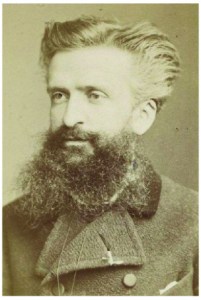
About Gustave Le Bon
Gustave Le Bon (7 May 1841 – 13 December 1931, France)French sociologist, psychologist, anthropologist, archaeologist, historian, physician and inventor. He became known mainly, at least in Greece, with his work "The Psychology of the Masses (or Crowds)" (The Crowd: A Study of the Popular Mind, 1895). He began his writing activity in the field of anthropology. His writing work incorporates theories of national characteristics, racial and male superiority, herd behavior and crowd psychology. He traveled for at least twenty years (1860-1880) in Europe, Asia and North Africa. His conclusions, in each of the above scientific fields, in which he was involved, are completely based on his research, scientific proof and are characterized by absolute objectivity. Like other sociologists of his time, he mainly studied mob behavior and, based on his psychology, analyzed various historical and political events, laying the basis for the science of social psychology. The findings of his research were contrary to the prevailing theories and beliefs about the equality of people and races, peace and brotherhood. He demonstrated not only the unscientific character of these theories, as contrary to reality, but also their disastrous results, when they prevail. Le Bonne's theories influenced Hitler in the creation of the fascist regime and in the foundation of the practice of propaganda. His main works are: The Psychology of the Mobs, Political Psychology and Social Defense, The Psychology of Revolutions, The Psychology of the modern era.