Free shipping with purchases of €20

Jean-Jacques Rousseau was born in Geneva, Switzerland in 1712 and died in Hermenonville, French province of Oise, in 1778. Son of Isaac Rousseau, he watches by profession, and Suzanne Bernard. His mother dies shortly after his birth. His father, Isaac Rousseau, is forced to leave Geneva after a quarrel, and Jean-Jacques enters as a boarder at Pastor Lambertsier’s in Bosché. As a young man he lived a life full of adventures and worries. In 1742, he was in Paris where he wrote two essays on music until 1743 and developed relations with the Enlightener Denis Diderot. In 1749, he wrote for Diderot’s “Encyclopedia” all the articles related to music. In 1745, he met an innkeeper, with whom he would have five children. In 1750, he participated in a competition of the Académie de Dijon, and his dissertation on the arts and sciences, in which he argued that progress implies corruption and degeneration, In 1755, in another competition of the same Academy, he responded with his first major work: “Discourse on the origin and foundations of inequality between men”. This work, however, provoked strong reactions against Rousseau. In 1762, “Emilios” was published and sentenced to the stake by the French parliament. Rousseau, pursued, flees to Switzerland. Ban on the “Social Contract” in France; burned together with “Emilios” in Geneva. The Bishop of Paris excommunicated him for “Emilios”. He was constantly persecuted and in 1765, he decided to leave for England, where he was invited by the philosopher Hume, with whom he later clashed. In 1778, he accepted the hospitality offered to him by the Marquis de Girardin in Ermenonville, where he died suddenly on July 2.
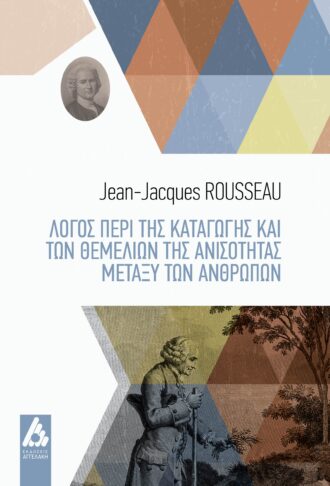
Discourse on the origin and foundations of inequality between people
Τιμή εκδότη: 11,00€
Τιμή angelakis.gr: 9,90€
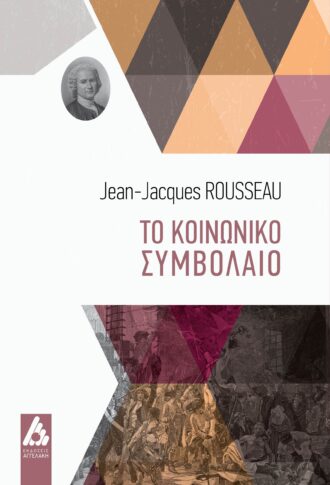
The Social Contract
Τιμή εκδότη: 14,00€
Τιμή angelakis.gr: 12,60€