Free shipping with purchases of €20

Interview of Ioanna Xynaropoulou with Marika Arvanitopoulou

Are we impressed in your CV that you are only 22 years old and fascinated by literature you are already writing your first book?
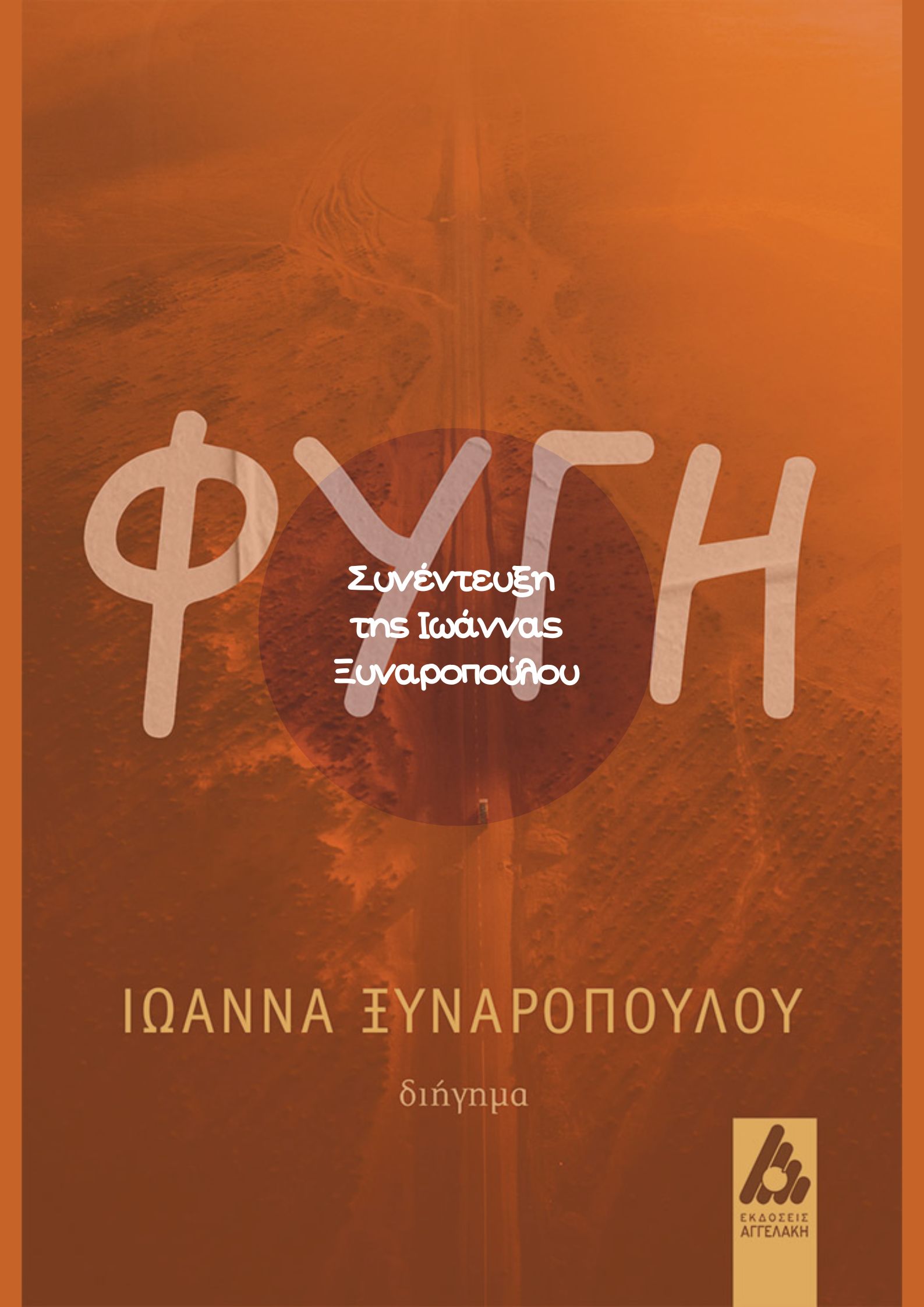
What is Flight?
The Flight is a literary allegory of a man who tries to escape from the established, the trivialities of life that we could call something like ‘dream swamps’, but in the end, trying to overcome them, he is led to a fatal disaster. The tragedy of the characters is intense, of course, as is the futility of their ambitions, but my goal was to write a work that speaks primarily about the effort to elevate man to the pedestal of freedom, spirituality, glory and ultimately lead to an emotional alteration and at the same time, purification.
The period of the pandemic that we experienced led you to talk about a story in the era of the plague (a disease that plagues people, you say?)
One could possibly take it in the data of our time, after all, Eco had spoken about the death of the author with very apt allusions to this question, but certainly our experiences affect our thinking and, by extension, our writing. However, because the book I wrote is not clear in all its interpretations, some concepts are wandering either deliberately, or because I did not feel so familiar on paper to expand, the plague, as I conceived it, is that disease that plagues people and societies internally and gradually extends outwards. I believe that mental illness can be somatized and vice versa, but a deep mental anguish can also be perceived as a plague. Illness, therefore, is not necessarily a pandemic of covid or plague, but also a pandemic of ideological, moral and spiritual decline.
Who do you consider your teacher in writing?
I think that my writing teachers change more or less over time, depending on the literature and the type of writing that best suit my psyche. But from the age of 13 I had the great fortune to embrace the writing of Nikos Kazantzakis, something that had a huge impact not only on my writing but also on my mentality, being still a teenager and unconscious. Teenagers, as we know, are looking for role models and this writer was a beacon for me in deeper inner searches and I think that thanks to the influence I also matured in terms of my literary preferences. It is a fact that Kazantzakis’ writing in general exerts an unprecedented influence on its readers⸱ it is perhaps the dense and suspenseful writing or the ideological and contemplative mood that encloses it with abundant symbolism and lessons⸱ which is why it is characteristic that the writer in question has only fanatical followers or opponents. During my student years I came into greater contact with Homer, Virgil and Dante, whom I consider pillars of modern literature. Worthy of mention are, of course, Dostoevsky, Tolstoy, Chekhov, but also Papadiamantis, Cavafy, Karagatsis, Anagnostakis, Seferis… Of course, I don’t have the intellect and the gifted writing of the above, but if anything, they have a writing that I would call enlightening, liberating, moralistic.
Which 2 books made you decide you want to tell your own stories?
Of course, these are not just two books but more, frequent reading undoubtedly pushes more easily to writing creation. However, if I had to single out two works – which is difficult – that changed my way of thinking, it would be “The Last Temptation” by Nikos Kazantzakis and “The Brothers Karamazov” by Fyodor Dostoevsky. It is paradoxical that the former’s masterpiece and at the same time symbolic novel was included in the forbidden bibliography of the Vatican, as well as Machiavelli’s “The Prince”. The priests almost excommunicated Kazantzakis under the pretext of desecrating Christianity, but the writer highlights more than any other the parabolic dimension of Christianity in man’s life, the dual, as he wrote, hypostasis of Christ, the flesh and spirit that fight and unite each other at the same time. And thus it highlights that crossroads that the ancients called in the myth of Hercules “The crossroads of Virtue and Vice or Happiness”, that is, the decision of man to fulfill one of two things in his life: self-fulfillment, carnal satiety, the primitive thirst for the acquisition of goods, pleasures and titles, or the sacrifice of the above on the altar of a higher debt. It is the happiness that springs from toil and toil, but its fruits are sweeter and sometimes eternal, it looks towards the well-being of humanity as a whole.
From Dostoevsky’s work, what is most strongly imprinted on me is the achievement of freedom through pain and difficulties; the deviation and moral decay of man that leads to inner liberation, the realization of a higher debt that transcends the worldly in a paradoxical way, but emanates through them.
What will be the theme of your next book?
My next book, ideally, I would like to be a step higher than the previous one, even more rich and dense the narration and writing. I am inspired by the conversion of man, I little envision my heroes as tragic Aeschylus heroes who, from unbridled heroism, fall into asceticism and truthfulness. Even the most difficult ending, however, I wish to have a golden mean, a longing for redemption that Kazantzakis may have transfused to me, and the ardent desire for freedom – the inner one primarily.
What did you think when you heard about the arrest of a children’s book author?
We now live in an era of uncontrollable abuse and rape, it is no longer surprising that this writer is also in the position of the writer in question, just as parents, educators or priests, in general people with a supposed spirituality and compassion, used to be in his place. The writing of each person, I believe, emanates from his being and his temperament, but in this case, the confession of the writing occupation as the result of a sexual deviation is perverse.