Free shipping with purchases of €20

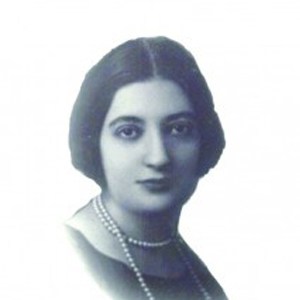
Description
… They say it’s because I can die from one moment to the next. No, it’s not, but, because I don’t want to die at the hands of human murder when I want to live… I want to live… I have a house that I have built with a thousand cares and longings, I have enclosed in it what I have loved and what I have acquired with toil, I treasure my habits nailed to its corners, my happiness in its mystery, my dreams under its roof, I have lived with the unspeakable anticipation and the reaped longing of the Beloved Chosen One, I heard his footsteps in the large rooms and his touch on the iron front door. I have two boys who carved on its walls with indelible scratches their outrageous ships and their strange little men with elliptical palms and open thin five fingers. Their first and present words resounded: Sweet mother, the sweetest of all mothers…
Additional information
| Weight | 1 kg |
|---|---|
| Βιβλιοδεσία | Paperback |
| Διαστάσεις | 21x14cm |
| Αριθμός Σελίδων | 186 |
| Ημ. Έκδοσης | 2010 |
| ISBN | 978-960-8160-48-4 |
Reviews (0)
About Baila – Sideri Katina
Katina Baila-Sideri was born in Syros to a Syrian father and a Naxian mother. Her mother, illiterate, by a game of chance, found herself young in Paris, governess in the house of the Count de Laroschfoucaut. He lived there for 3 years. On the way back, passing through Syros, she married Dimitris Bailas, a builder and good craftsman. With the experience she had, she persevered and sent her daughter to the French School of the Frere. Little Katina got her crop there. At a young age, Katina published the magazine "Cyclades" together with Rita Boumi-Papa and Victor Papadakis. In the almost 2 years of their uninterrupted monthly publication, the Cyclades have hosted the most famous names. Here are a few: T. Agras, A. Doxas, A. Drakakis, D. Zevgolis, G. Zevgolis, Ch. Zitsaia, N. Kavvadias, K. Kairofyllas, L. Karakalou, G. Kordatos, S. Korres, G. Kypreos, S. Mavroidi-Papadaki, Melissanthi, Myrtiotissa, N. Pappas, A. Simiriotis, A. Sigalas, A. Sikelianos, G. Skarimbas, S., M. Stasinopoulos, A. Tarsouli, A. Terzakis, N. V. Tomadakis, M. Filintas etc. He is also involved in drawing. Her design is the cover of "Cyclades", but her sketches accompany publications by other authors, such as Yannis Skarimbas and Rita Boumi-Papas. He maintains a close correspondence with important personalities in Greece and abroad, such as Yannis Skarimbas, Rita Boumi Papas, Magdeleine Paz (Marx) and others.In the period 1930 – 1932 he had a remarkable writing activity. Her short stories were published in "Cyclades", but also in other magazines, such as Elliniki Epitheorisis, I Eparchia, Alexandrini Techni, O Logos, Thessalika Grammata, etc. Her marriage to Dr. Antonis Sideris followed and a decline in her literary production. With the war, he begins to write again. In total, he left 22 short stories (9 unpublished), 3 poems, 6 plays, translations of 2 novels, 1 short story and 1 article from French, while he translated Christ by A. Sikelianos into French (the manuscript has been lost). The "War Triptych of a Woman" is one of her most important texts. Both in her writings and in life itself, her attempt to access from many sides the social position and role of the woman, the woman whose horizons have been opened and wants to fly, but something is constantly limiting her, cutting off her wings. Sometimes it is the disease – we are in the 1930s, when tuberculosis was on the rise – and sometimes the social dimension, always in combination with its gender. In her first writing phase, the romanticism of the time prevails. In the second, the social element dominates. "Why don't all the women of the world rise up to stop the war, this man-killing monster?" Around 1948 he began to become spiritually deficient. The headaches upset her. Her body is leaning. He gets dizzy when he stumbles on the street. He can't concentrate. He pours sugar instead of flour into the vasilopita. He forgets where he hid the fortnight. And one morning he doesn't wake up. Hours pass and she sleeps until the next day. Medicine reveals the tumor in the brain. In February 1950 he will fall into a coma for good. And yet the end is still a long way off. Her husband's desperate efforts, lest a miracle happen in the meantime, make the months pass into an unspeakable torment. Fortunately, she doesn't seem to understand it, immersed in her dark lethargy. On August 5, 1950, she breathed her last. The whole of Syros will be able to do it. The Municipality of Ermoupolis decided to give its name to a street in the city. The people who follow her cry incessantly, especially women. The beauty of her form and soul remains alive to those who had known her.
Related products
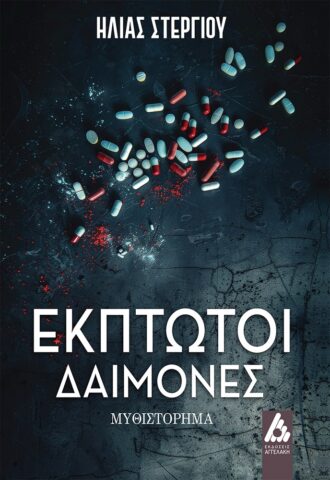

The wolfing out of the shamans
Τιμή εκδότη: 15,00€
Τιμή angelakis.gr: 13,50€

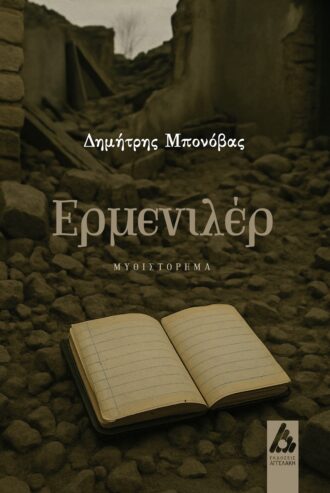



Breach of Duty: Stories of a Psychiatric Hospital Administrator
Τιμή εκδότη: 12,00€
Τιμή angelakis.gr: 10,80€








Reviews
There are no reviews yet.